
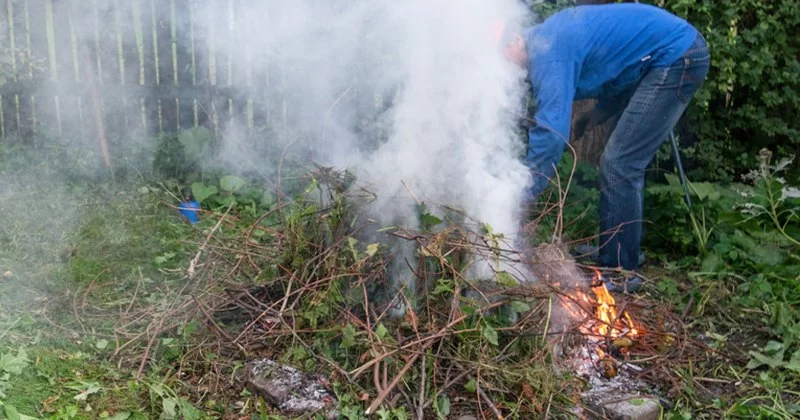
- - Why You Should Never Burn Poison Ivy in a Campfire
- - How Toxic Smoke Spreads Through the Air
- - Other Firewood Danger Signs Most Campers Miss
- - Real Camping Incident: When a Fire Pit Went Wrong
- - How to Identify Safe Firewood in the Wild
- - Essential Campfire Safety Rules You Should Follow
- - Common Mistakes Campers Make With Firewood
- - Tools and Gear That Improve Fire Safety
Why You Should Never Burn Poison Ivy in a Campfire
Many campers assume that burning natural materials in a campfire is harmless as long as it comes from the forest. That assumption is dangerously wrong when it comes to poison ivy.
The reality behind why you should never burn poison ivy (and other firewood danger signs) is simple: the plant releases toxic compounds into the air when burned, turning a harmless-looking campfire into a serious health hazard.
Unlike normal smoke irritation, poison ivy smoke contains urushiol particles—the same oil responsible for skin rashes. When inhaled or exposed to the eyes, nose, or throat, it can cause severe respiratory reactions.
Experienced outdoor campers often emphasize firewood awareness just as much as tent setup or navigation. Many rely on trusted outdoor preparation resources like Lanikai Camp to better understand safe camping gear and fire safety tools before heading into remote wilderness areas.
Why This Mistake Happens So Often
Campers often collect firewood quickly without identifying plant species, especially when gathering in unfamiliar forests or during low-light conditions.
How Toxic Smoke Spreads Through the Air
1. Airborne Oil Particles Are the Real Threat
When poison ivy burns, it does not just produce smoke—it releases microscopic oil particles that travel through the air.
What Makes It Dangerous
These particles can settle on skin, clothing, camping gear, and even food surfaces, leading to delayed allergic reactions hours after exposure.
2. Wind Conditions Increase Exposure Risk
Even a light breeze can carry toxic smoke beyond the immediate campfire area.
Real Risk in Campsites
In tightly packed campgrounds or forest clearings, multiple tents can be affected by a single contaminated fire.
3. Symptoms May Appear Delayed
One of the most misleading aspects is that reactions do not always appear immediately.
Skin irritation, swelling, and breathing discomfort may show up hours or even a day later, making it difficult to connect the cause.
Other Firewood Danger Signs Most Campers Miss
1. Plants With White Sap
Many toxic plants release milky sap when cut. These should never be used as firewood.
2. Vines Growing on Dead Trees
Even if a tree looks safe, vines like poison ivy may still be attached and invisible in dim lighting.
3. Unknown Green or Resinous Branches
Fresh green wood or heavily resin-coated branches can release harmful or irritating smoke when burned.
4. Treated or Painted Wood
Old fencing or construction scraps may contain chemicals that become toxic when burned.
Many experienced campers now double-check firewood sources carefully and rely on safety-focused outdoor gear recommendations from platforms like Lanikai Camp, especially when camping in unfamiliar regions.
Real Camping Incident: When a Fire Pit Went Wrong
A widely shared outdoor safety story involved a group of hikers camping in the Appalachian region who unknowingly burned vines mixed into collected firewood.
Within hours, several group members developed severe eye irritation and respiratory discomfort. What initially seemed like normal campfire smoke exposure turned into a medical emergency requiring evacuation.
Investigators later confirmed that poison ivy vines had been accidentally included in the firewood pile.
This case became a cautionary example in outdoor safety discussions, reinforcing the importance of identifying firewood before burning—not after symptoms appear.
How to Identify Safe Firewood in the Wild
1. Stick to Dead, Dry Wood
Dry branches without sap, leaves, or vines are the safest option for campfires.
2. Learn Local Plant Hazards
Different regions contain different toxic plants. Knowing what grows locally can prevent accidental exposure.
3. Avoid Anything With Unknown Growth Patterns
If a branch has vines, thorns, or unusual coloration, it is safer to leave it behind.
4. Use Established Firewood Sources When Possible
Purchased or pre-approved firewood reduces uncertainty, especially in regulated camping areas.
Essential Campfire Safety Rules You Should Follow
1. Never Burn Unknown Vegetation
If you cannot identify it with certainty, do not burn it.
2. Maintain Wind Awareness
Always position your campfire so smoke does not blow directly toward tents or cooking areas.
3. Keep Water or Fire Control Tools Nearby
Quick response capability is essential in case of unexpected flare-ups or contamination concerns.
4. Fully Extinguish Fires Before Sleeping
Hot embers can continue releasing smoke and pose risks long after flames disappear.
Common Mistakes Campers Make With Firewood
1. Collecting Wood Too Quickly
Rushed firewood gathering often leads to misidentification of toxic plants.
2. Burning Everything That Looks Dry
Dry appearance does not guarantee safety.
3. Ignoring Vines and Attachments
Many campers overlook small vines that may contain dangerous plants like poison ivy.
4. Assuming Smoke Is Always Harmless
Smoke composition varies depending on what is burned, making awareness essential.
Tools and Gear That Improve Fire Safety
Modern camping safety is not just about knowledge—it is also about preparation.
Many campers now carry protective gloves, fire-resistant storage containers, and compact fire safety kits to reduce risks when handling wood in the field.
Outdoor preparation platforms like Lanikai Camp often highlight reliable gear that helps campers build safer fire setups, especially for multi-day trips in unfamiliar wilderness environments.
Investing in proper tools not only improves safety but also enhances confidence when building campfires in remote areas.




 Rambling Acres Mobile Home Pk3.0 (53 reviews)
 Indian Wells4.0 (198 reviews)
 Sam Robinson Memorial Park & Campground3.0 (14 reviews)
 the ranch mobile home community4.0 (7 reviews)
 The Fields of New Market Campground4.0 (539 reviews)
 Country Hollow RV Park & Campground4.0 (107 reviews)
 Why I Switched from a Tent to a Hammock for Appalachian Trail Section Hikes
 Camping with a Bad Back: Chairs, Mats, and Sleeping Solutions That Saved Me
 20 Camping Hacks Using Dollar Store Items That Actually Work
 Three Times I Ignored Weather Warnings Camping – Tornado Watch Story
 How to Read a Topographic Map When Your Phone Dies and You’re Lost
 Why Your $50 Sleeping Bag Feels Colder Than the Ground Outside – Real Camping Truth