
- inflatable-vs-compressible-camping-pillow-comparison
- diy-stuff-sack-camping-pillow-method-explained
- real-camping-pillow-fight-comfort-test-experience
- backpacking-sleep-comfort-and-weight-tradeoffs
- choosing-best-camping-pillow-for-outdoor-sleep
Camping Pillow Fight: Inflatable vs Compressible vs Stuff Sack DIY
Every camper eventually discovers that sleeping comfort is not just about tents or sleeping bags—it often comes down to one small but surprisingly emotional piece of gear: the camping pillow. The debate around inflatable camping pillow options, compressible pillow camping designs, and DIY stuff sack pillow hacks has turned into a kind of unofficial “camping pillow fight” among backpackers who all swear their choice is the best.
But when you actually spend nights outdoors—on uneven ground, after long hikes, or during unpredictable weather—the differences between these pillow types become more than just preferences. They directly affect sleep quality, energy levels the next day, and even how enjoyable the entire trip feels.
The Real Meaning Behind the Camping Pillow Debate
Why campers care more about pillows than expected
Many beginners assume any soft item can function as a pillow, but experienced campers know better. After a full day of hiking or driving, neck alignment and pressure relief become critical. A poorly chosen pillow can turn a peaceful night into hours of tossing and turning. This is where the camping pillow debate becomes very real.
Over time, three main solutions have emerged: inflatable models for ultralight travel, compressible foam pillows for comfort seekers, and improvised DIY stuff sack pillow setups for minimalist campers.
A common mistake new campers make
A frequent story among backpackers is relying on bundled clothes as a pillow for multiple nights. While it seems practical at first, it often leads to neck stiffness and poor sleep posture. Many travelers only realize this after waking up sore on day two of a trip, wishing they had brought a proper setup.
Inflatable Camping Pillows: Lightweight but Divisive
Why ultralight hikers love them
Inflatable camping pillow designs are popular among long-distance hikers because they pack down to almost nothing. They are easy to inflate, adjustable in firmness, and extremely lightweight. For anyone counting grams in their backpack, this solution is hard to beat.
The comfort tradeoff most users notice
However, comfort is where opinions split. Some campers describe inflatable pillows as slightly unstable or “balloon-like,” especially if overinflated. Even newer designs with textured surfaces still struggle to replicate the natural softness of foam-based options.
Still, for thru-hikers or minimalist travelers, the weight savings often outweigh the comfort compromise.
Compressible Pillow Camping: The Comfort Favorite
Why foam-based pillows feel more natural
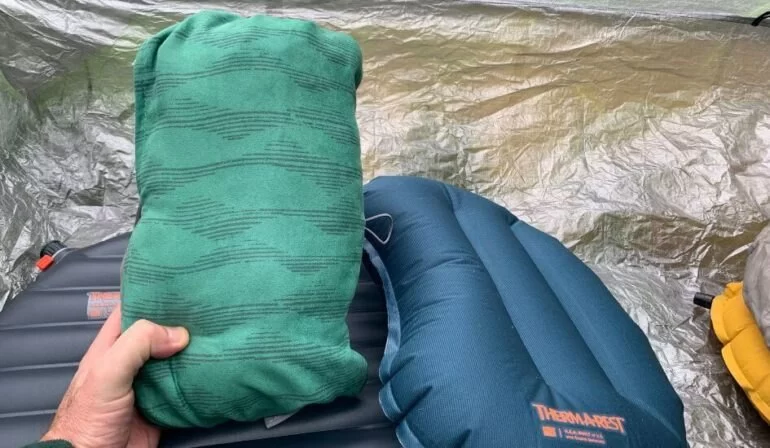
Compressible pillow camping gear uses shredded foam or memory foam that expands when unpacked. This creates a more natural head support system that closely resembles home pillows. Many campers prefer this option because it reduces neck strain and improves sleep quality significantly.
The downside of bulk and pack size
The biggest drawback is size. Unlike inflatable versions, compressible pillows take up valuable backpack space. On multi-day trips where gear efficiency matters, this becomes a serious consideration.
Despite this, many weekend campers choose compressible pillows simply because better sleep outweighs the inconvenience of extra volume.
DIY Stuff Sack Pillow: The Minimalist Hack
How the DIY method actually works
The DIY stuff sack pillow approach is simple: a waterproof stuff sack is filled with soft clothing like jackets or fleece layers. This creates a makeshift pillow that uses items already carried in your pack. It’s a classic minimalist camping trick that requires no extra gear.
Real-world performance on the trail
In practice, results vary widely. If packed carefully with soft layers, it can feel surprisingly comfortable. However, during colder nights when clothing is needed for warmth, the available materials may be limited, reducing pillow quality.
Many experienced campers use this method as a backup rather than a primary sleep solution.
A Real Camping Pillow Test from the Trail
Three nights, three different pillow setups
One backpacking group documented a simple experiment during a weekend trip. Each night, they rotated between an inflatable pillow, a compressible foam pillow, and a DIY stuff sack setup. The goal was not scientific precision, but honest comparison under real conditions.
The inflatable pillow won on weight and packability but lost on deep sleep comfort. The compressible pillow delivered the best rest but felt bulky during the hike. The DIY setup performed inconsistently depending on clothing availability.
What the group ultimately learned
Their conclusion was surprisingly practical: no single option is perfect. Instead, the best camping pillow depends on trip length, terrain, and personal sleep sensitivity. This is why many experienced campers now carry hybrid setups or switch systems depending on the trip type.
How to Choose the Right Camping Pillow for Your Style
Matching gear to real travel conditions
If you prioritize ultralight backpacking, inflatable options make sense. If comfort is your main goal for shorter trips, compressible pillow camping gear is often the better choice. And if you prefer minimalist travel or backup systems, the DIY stuff sack pillow remains a reliable emergency solution.
The key is understanding how much sleep quality affects your overall outdoor experience. A well-rested camper enjoys trails more, makes better decisions, and recovers faster.
Where Better Sleep Systems Make a Difference
Choosing the right sleeping setup is not just about pillows—it’s about building a complete comfort system that includes sleeping bags, pads, and head support. Many travelers now turn to curated outdoor resources like Lanikai Camp to explore gear combinations that actually work together in real camping environments rather than relying on isolated product specs.
When your sleep system is properly balanced, even rough terrain nights become manageable, and the “camping pillow fight” turns into a simple personal preference rather than a nightly struggle.



 Arizonian RV Resort4.0 (189 reviews)
 Elk River Camp and RV4.0 (49 reviews)
 Albany / Corvallis KOA Journey4.0 (579 reviews)
 Happy Campers Campground4.0 (52 reviews)
 Camp Pontiac Campground LLC4.0 (28 reviews)
 Cortland Acres4.0 (24 reviews)
 Why I Switched from a Tent to a Hammock for Appalachian Trail Section Hikes
 Camping with a Bad Back: Chairs, Mats, and Sleeping Solutions That Saved Me
 20 Camping Hacks Using Dollar Store Items That Actually Work
 How to Read a Topographic Map When Your Phone Dies and You’re Lost
 Three Times I Ignored Weather Warnings Camping – Tornado Watch Story
 Why Your $50 Sleeping Bag Feels Colder Than the Ground Outside – Real Camping Truth